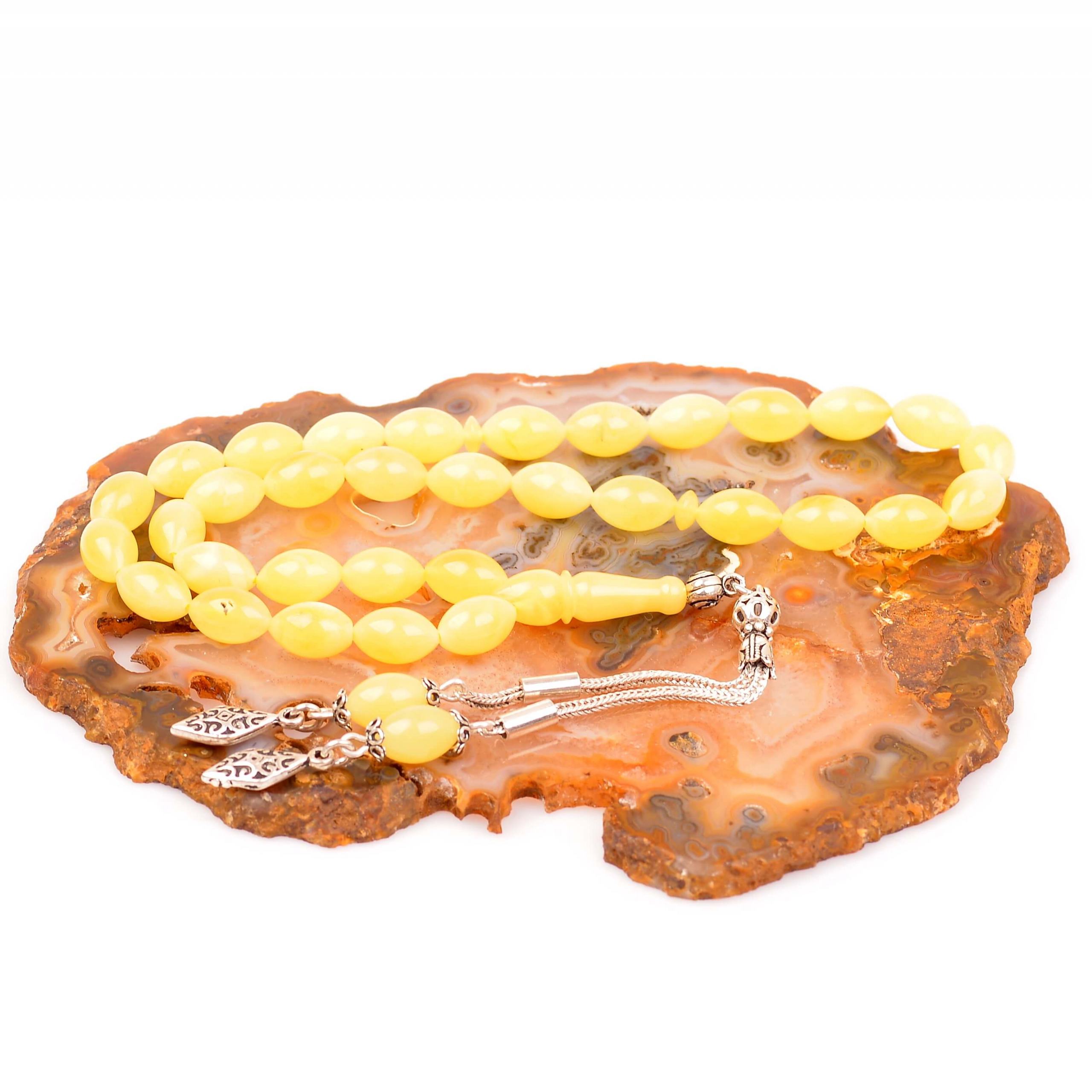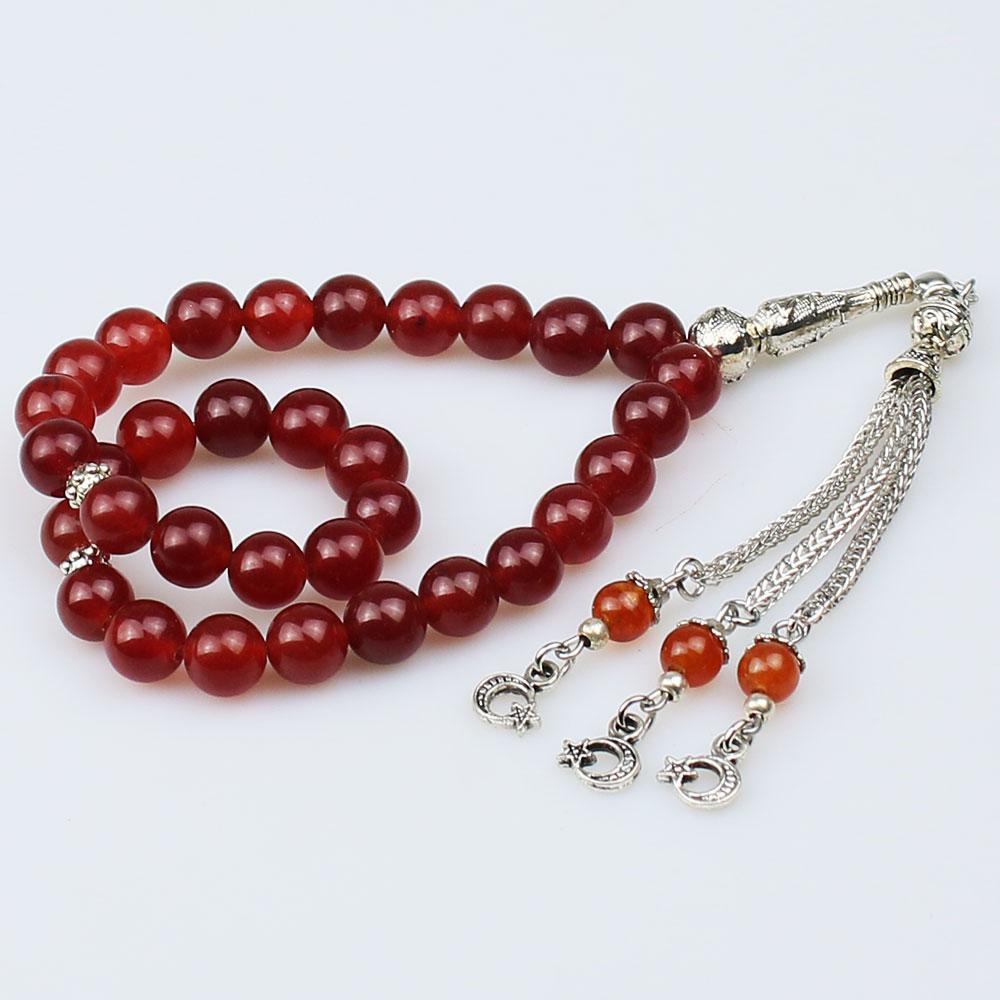
About seventy pieces in our catalogue carry Ayat al-Kursi in their name, and roughly two out of three of them are necklaces. That ratio holds more or less everywhere you look, and it is the first interesting thing about this verse as an object: people overwhelmingly want it at the throat, not on a finger or a wall.
The verse
It is Qur'an 2:255 — a single verse, the 255th of Sūrat al-Baqara, the longest chapter. Its name comes from one word inside it, al-kursī, which means seat, throne, or footstool. Translations split on how to render it, and classical commentators split on whether it means a literal throne, God's knowledge, or His dominion. That disagreement is old and unresolved, and anyone who tells you flatly what al-kursī means is picking a side without telling you.
The verse itself is a statement about God: that He is the living and self-sustaining, that no drowsiness or sleep takes hold of Him, that nothing intercedes with Him without His leave, that His knowledge covers what is ahead of people and behind them, and that sustaining the heavens and the earth does not tire Him. It ends on His being the Most High, the Most Great.
Read it once and the appeal is obvious. It is not a prayer asking for something. It is a description of what is in charge. That turns out to be very portable.
Why this verse and not another
There is a well-known report in Ṣaḥīḥ al-Bukhārī in which Abū Hurayra catches a thief in the charity store three nights running, and the thief buys his freedom the last night by teaching him that reciting Ayat al-Kursi before sleep keeps a guardian over you until morning — and the Prophet then tells him the thief was truthful, though a liar. Other reports, graded differently by different scholars, recommend reciting it after each obligatory prayer.
So the verse arrives in popular practice already attached to the idea of protection. Wearing it is a short step from reciting it. Whether that step is a good one is a live argument among scholars, and we will come back to it.
Two things worth being straight about. First, carrying Qur'anic text on the body is not a modern invention: written amulets (muska, hamail), inscribed rings and talismanic shirts are documented in Ottoman practice and earlier. What is modern is the form — an industrially produced silver pendant on a chain, sold at scale. Second, mainstream scholarship across the schools treats such a pendant as a reminder rather than a source of protection in itself. Sellers who imply otherwise are selling you something the tradition does not offer.
How it looks in silver
The script is the design decision, and most listings will not explain it to you.
Kufic is the angular one. Straight strokes, right angles, long horizontals, minimal curve. It is the older monumental style, the one you see on early Qur'an folios and on architecture, and in jewellery it reads as geometry first and text second. If you cannot read Arabic, Kufic is frankly the more forgiving choice — it looks deliberate as pattern.
Naskh and thuluth are the cursive styles, round and connected, naskh being the workaday book hand and thuluth the grand sweeping one. Cursive script on a small pendant is harder to execute and much less forgiving. Letters that should be distinct merge when the engraving is shallow or the stamping is worn. If you are buying cursive, ask for a close photograph.
Then the technique:
Engraved — cut into a solid plate, usually the most legible and the most durable, since the text sits below the surface where it is protected.
Pierced or openwork — the letters cut clean through, so skin or shirt shows behind them. Beautiful, and the one to be careful with, because thin cursive letterforms cut through thin silver are structurally weak. The counters of the letters are where it cracks.
Enamelled — coloured glass or resin filling the recesses, usually black or deep blue, which makes the text jump. Enamel wears. Black-filled engraving on a piece worn daily will need refilling in a few years.
Stamped or cast — a die presses the text, or the whole thing is poured from a mould. This is most of the market and there is nothing wrong with it, but the letters will be softer-edged than engraved work, and a cast copy of a cast copy loses definition each generation.
Istanbul workshops dominate this category in our catalogue — Grande Amor alone accounts for about thirty of these pieces, and the southeastern silver towns barely appear here at all, which surprised us. You can browse them in the Islamic jewellery collection. Every listing links to the jeweller's own site, which is where the real, current price sits.
The question people actually have
Here is what buyers ask and almost nobody answers: is it disrespectful to wear it?
The honest answer is that scholars differ, and nobody writing for a jewellery site is qualified to settle it. So what follows describes the disagreement; it is not a ruling. Ask someone qualified in your own tradition if it matters to you — and it should, because you are the one who has to live with the decision.
The points of difference, roughly:
On amulets generally. Some scholars, reading the reports that condemn tamā'im (amulets), extend that condemnation to anything worn for protection, including Qur'anic text. Others distinguish sharply: an amulet containing the words of God is a different case from one containing charms or unknown writing, and they permit it. Both positions have serious backing. Neither is fringe.
On the bathroom. This is the practical one. A widely held view is that Qur'anic text should not be carried into a lavatory, and many people simply remove the pendant beforehand or tuck it inside their clothing. Other scholars hold that a covered or enclosed inscription is fine. In most versions of the argument the disagreement is about where the line falls rather than whether there is one.
On states of ritual impurity. Similar shape of argument, similar split, and it is the reason some people prefer a piece they can take off in one motion — a simple clasp rather than a knotted cord.
On what happens to it afterwards. Rarely discussed and genuinely important. A pendant bearing Qur'anic text is not ordinary scrap. If it breaks beyond repair, most traditions hold that you do not simply bin it; burying it or giving it to someone who handles such things is the usual practice. Worth knowing before you buy a thin openwork piece for a small child.
Practical consequences, if you want them in one line: engraved over pierced if it will be worn daily, a clasp you can open one-handed, and a chain long enough to tuck under a collar.
One thing we would change about how these are sold
The photographs. Almost every listing in this category, ours included in places, shows the piece at a flattering angle where the script catches light and reads as texture. Nobody shows it flat, straight on, at the size it actually is. If you are buying a verse, you are buying the letters, and you deserve to see whether they are sharp or mushy before the parcel arrives. Ask. A workshop that cut the text by hand will be pleased you noticed.