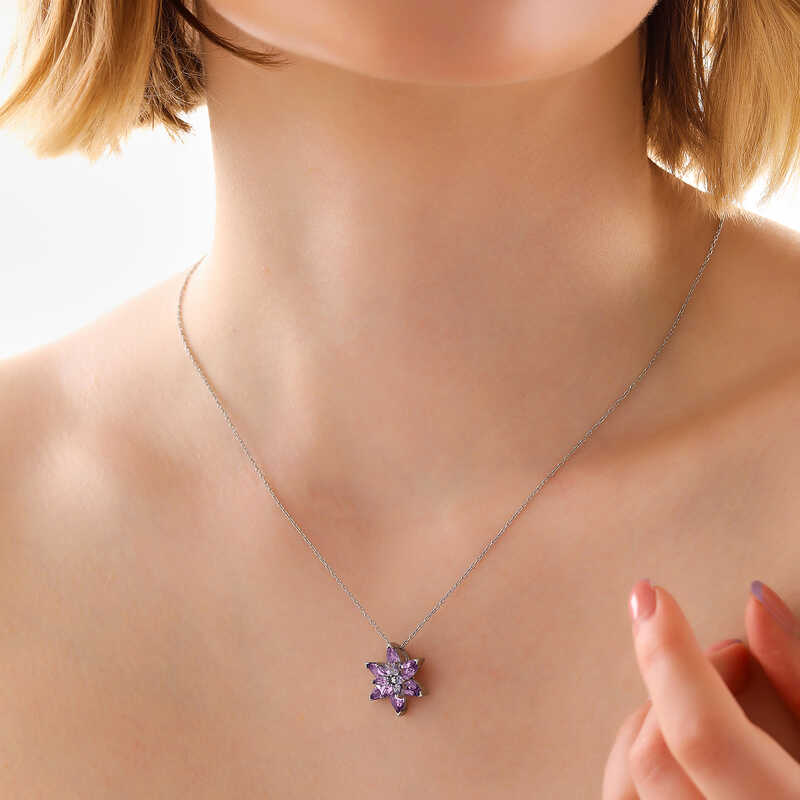
We index 78 Turkish jewellers and a bit over thirty thousand listings. Search those listings for the string "925" and you get about 4,450 hits — roughly one product title in seven puts the number in the name before you have even opened the page. Fifty-six of the seventy-eight put silver, gümüş or 925 into at least one product title, and forty-five do it in ten titles or more. So this is the default material of the Turkish jewellery trade, and "is it real" is the first thing a buyer abroad wants to know.
Short answer up front: the only things that settle it are a hallmark you can trace and a measurement. Everything you can do at your kitchen table gives you evidence, not proof. Anyone who tells you the ice cube test is definitive is selling ice cubes.
What 925 means
Pure silver is 999 parts per thousand, sometimes written .999 or "fine silver." It is also nearly useless for most jewellery. Too soft — a fine silver ring deforms under ordinary hand pressure, a clasp bends open, an earring post bows.
So it gets alloyed. Sterling is 92.5% silver and 7.5% something else, almost always copper. That is where 925 comes from: 925 parts per thousand. The copper is what makes the metal hold an edge, take a polish, and survive being worn. It is also, inconveniently, the main reason sterling tarnishes.
Other numbers you will meet: 800 and 830 (continental European silver, more copper, a little greyer), 900 (coin silver), 958 (Britannia), 999 (fine — usually bullion, or the very thin wire inside filigree work, where softness is the point).
You will also see 925 pieces sold as "rhodium plated." That is real sterling with a micron of white metal over it to stop tarnish. Not a fake, but it defeats several of the tests below, and when the plating wears through in a year or two the piece starts behaving like ordinary silver again.
Stamps, and how much to trust them
A Turkish piece should carry a 925 stamp, usually with a maker's or firm's mark next to it, tucked somewhere inconspicuous: inside a ring shank, on a clasp tongue, on the tag hanging off a chain, on the back of a bail. On chain-heavy work the stamp often sits on a small soldered tag rather than on the chain itself. That is normal and not a red flag.
Turkish workshops are expected to register their marks, and established ones do. But a hallmark is a stamped piece of metal. Stamps get forged; more commonly, an honest 925 stamp sits on an honest sterling piece that has then been described in ways the metal does not support. The stamp tells you about alloy. It tells you nothing about who made the design, whether the stones are what the listing claims, or whether the gold colour on it is plating.
An unstamped piece is not automatically fake either. Very small findings, some handmade work, and older pieces can be unmarked. It just means you are now relying entirely on the seller.
Home tests that actually tell you something
Weigh it, then measure its volume. The best test you can do at home, and almost nobody mentions it, because it sounds like homework. Sterling has a density of about 10.3 g/cm³. Weigh the piece dry on a scale that reads to 0.01 g. Then weigh it suspended in water and use the difference to get its volume. Divide. Brass lands near 8.5, nickel alloys near 8.7, steel near 7.9. This catches most base-metal fakes outright. It fails on hollow pieces and on anything with stones, enamel or a leather cord.
The magnet slide. Silver is not magnetic. Neither is brass, so a magnet proves little as a positive — but it is a fast negative. Take a strong neodymium magnet and tilt the piece. On solid silver the magnet slides down slowly, visibly dragged by eddy currents; a steel-cored fake will grab and stick. Anything that snaps to the magnet is not silver.
The ice cube. This one works, with a caveat. Silver conducts heat better than any other metal, so an ice cube on a flat silver surface melts noticeably faster than on brass or steel. The caveat is that you need a control — ice melts on everything, and "faster" means nothing on its own. Put two cubes down, one on the suspect piece and one on a known steel spoon, and watch. When the difference is there, it is obvious.
Smell it. Rub the piece hard between your fingers for a few seconds and bring it to your nose. Sterling, even with its 7.5% copper, is close to odourless. A sharp coppery smell suggests a lot of copper, or a thin plating already worn through. Crude, but free.
Look at the wear points. Plating goes first where friction is highest: the underside of a ring shank, the edge of a clasp, the high points of a pendant, the inside of a bangle. Yellowish or pinkish metal peeking through at exactly those spots is plating over brass. This is the most reliable visual check there is.
Tests to ignore
The ring or ping test. People will tell you sterling rings like a bell. Tone depends on shape, mass and how you hold the thing far more than on alloy, and a hollow bangle sounds nothing like a solid one of the same metal. Useless on jewellery.
Bleach. A drop of household bleach does darken silver fast. It also chemically attacks the surface of the piece you just bought, and it darkens several non-silver alloys too. Do not put bleach on jewellery.
Acid testing at home. Nitric acid kits are real tools and jewellers use them, but they work by cutting into the metal, and the reading is only valid below the plating. Leave it to someone whose bench has ventilation.
"It didn't tarnish, so it's fake." Backwards, and worth a section.
Tarnish is a good sign
Silver tarnishes because sulfur compounds — in air, in wool, in rubber bands, in eggs, in some people's skin — react with it to form silver sulfide, the black film. That is not corrosion eating the metal. It is a surface layer, and it polishes off.
A sterling piece that goes grey-black in a drawer over a few months is behaving exactly as sterling behaves. A piece that stays mirror-bright for years is either rhodium-plated, kept in an anti-tarnish pouch, or not silver. The rate depends heavily on your climate and your skin chemistry, which is why two people can buy the same chain and have completely different experiences with it.
Clean it with a proper silver cloth, or a mild silver dip used briefly. Not toothpaste, whatever the internet says — it is an abrasive. And note that oxidised silver, the deliberately blackened recesses in engraved and filigree work, is tarnish somebody put there on purpose. Polish that out and you have flattened the design you paid for.
Solid versus plated
Silver plate is a layer of silver a few microns thick, electro-deposited onto a base metal, usually brass or a nickel alloy. New, it looks identical. It is not a scam as long as the listing says so. What it is not is durable: it wears through at contact points, it cannot be re-polished indefinitely because polishing removes silver, and it cannot be resized or properly repaired.
Solid sterling is silver all the way through — resizable, solderable, repairable, and with an actual scrap value underneath the workmanship. Look for the words silver plated, silver tone, EPNS, or a suspiciously low price on something that looks heavy.
One case runs the other way, and buyers get it wrong constantly: vermeil is gold plating over solid sterling. That is a good construction wearing what sounds like a cheap name. One caution: in the United States the word has a legal definition that sets minimums on both the karat and the thickness of the gold layer. A piece called vermeil by a seller outside the US has not necessarily met those, and the difference is how many years the gold stays on.
If you want to see how Turkish workshops mark and describe their own metal, the listings in our telkâri collection are mostly stamped sterling. Every piece links out to the jeweller's own site, which is where the live price is. Anything quoted second-hand, ours included, is approximate.